Saturday, January 31, 2009

Sunday Scribblings: Regret


(Image from here.)


A word like regret should have sparked about a million story ideas for me...or OK, at least ten. After all, I think most of my writing is about regret in some way—missed opportunities, words that stick in the throat that perhaps could have changed everything. A decision never made that perhaps would have been the right decision.

But nothing really came. See, regret is a really loaded word for me, so much so that I can't seem to fictionalize it (not this week, anyway). Regret is something that was constantly on my mind, for a really long time. There are whole pathways in my brain seemingly dedicated to traveling down the same painful ruts again and again.

I grew up believing in the myth of unlimited potential. That's what people always told me. “You have so much potential.” Potential sounded like the sound of my parents' voice when they had some money in the bank. Their voices grew fat with safety. What mattered, of course, was not spending the money. Not squandering the potential.

But, of course, potential doesn't sit in some cosmic bank account. It certainly doesn't accrue interest, especially if you don't apply it to your interests. And I didn't, not really. I was terrified of making the wrong choices, of wasting this potential—of facing my life with the same blank, pinched expression my parents had when the bank account grew lean again, but the bills kept arriving.

So many great opportunities floated close to me, bobbed within my grasp, then drifted away. So many times that I didn't reach out, didn't risk, didn't turn my potential into something more.

By the time Madam was born, I spent much of my day tuned into my mental radio station, K-RGRT.
(more)


Has anyone ever mentioned that babies are awesome listeners? Because they so are. I would strap baby Madam into her stroller and take her up and down the hill where we lived. The sun would stream through her shade, drenching my little Freudian with a luminescent glow. And I would confess...If only I had gone to graduate school immediately after college! If only I had worked harder in publishing, made more contacts, been less afraid! If only I had finished a novel and gotten it published already! If only I had moved to California before I got pregnant, then maybe I could have become a big wig in television before having a baby!

At this point, Madam would be asleep, no doubt thinking my words were some sort of whining prose poem for her benefit, instead of my own. Certainly, the content of my regrets rarely varied...only the intensity of the pain expressed by my words as I worked myself up to a crescendo of Lost Opportunity and Wasted Life Forever.

The Saturday when all that changed wasn't noticably different from all of the other days. Madam still in her stroller, sleeping in the pink glow of her partially shaded seat. The sky was blue as it almost always is in California. Cars rushed past us as I pushed her on the uneven pavement, up the hill.

I started my litany again, I got myself worked up again, maybe a tear or two escaped while I walked, faster and faster.

Then a new thought entered my mind. Why do I need to tell this story over and over again? Did I think I would ever forget my regrets? Did I think that I might gasp..be happy for a moment with my current circumstance if I could just...let it go? And...would I want Madam to grow up and feel this way? Feel like she was doomed because she'd made some less-than-brilliant choices in her past? I thought about my regrets. Some were things that I had wanted passionately, and had not worked hard enough to achieve. Some were things I had given up on too soon. But some were things I didn't really want, but felt like I should. And some were things I could see I was better off without anyway.

And the most important dream was not at all timebound. Was I attempting to join some Olympic Team of Novelists? No? So then why did it matter so much whether I wrote my novel at 25 or 35 or 50? Maybe no one would ever call me a wunderkind or an overnight sensation, but maybe I'd be a better writer for all that. Potential should be squandered, because potential means about as much as those numbers on our bank statements. It stands for something else--something that must be realized, even if it's as far from pristine "potential" as I am from my twenty-something self.  If I manage to teach Madam anything, I hope it's that—to burn through all of her potential fearlessly, to hold on to none of it. To trust that she'll be able to make more deposits to her bank account.

That day changed my relationship to my regrets. Yes, there are long, dark times where I can see every bad choice my younger self made—as though I am watching her through two sided glass, screaming, “No, do the OTHER THING. THE OTHER THING!” But usually I can dig up a little perspective from somewhere (I find chocolate and a nap are spectacular for this purpose) and remind myself that all of these plodding steps are going somewhere. They are going back to the page, again and again, until I spend whatever potential still lies curled within me.

_____________
You won't regret checking out Sunday Scribblings.

Labels: ,


Continue reading...

Monday, January 19, 2009

Sunday Scribblings: Pilgrimage (a short short)


(Hajj pic from here.)


Ed note: Just a short little story inspired by this weeks Sunday Scribbling prompt. It's been a while.

____________________________________________________________
Me? I'm nothing.

You know that feeling you get when you walk down the halls of your school, and a draft of air blows past you? That feeling like maybe you should look around, see if you missed something? But also feeling a little dumb, and not wanting anyone to see you looking around for nothing?

I'm that nothing. And believe me, I've worked at it.

We've all lived in this neighborhood so long it's like we've worn a groove into the cement. First my brothers, Rich and Tom. Then my sister, Angie. Another brother Johnny. Sister Liz. And then me, Jenny. Some days it can feel like my sneakers are trudging into their footsteps, but my feet never quite fit. And so I trip, a lot.

Everybody knows my family. They remember the red sirens streaking across the walls of their houses, breaking through the gray. They remember the muttered metallic gibberish of the police radios as the cops' big hands shoved my brothers' heads into the car. Maybe their heads had a groove too. A rut where only cops' big hands could fit.

My sisters? They kept their terror local—inside the walls of the school itself. I still get the sideline look and scuffle from the older girls, even the tall, tough ones. The ones who remember them, and see my red hair and pale skin as an ugly echo.

Usually, I tried to stay out of everyone's way. This was easier than it sounded, thanks to Aziza Manjur and her family. They've lived in the neighborhood almost as long as we have, and are probably the first Muslims anyone around here ever met. People gave them the weird glances for a while, but they were just too normal. They lived in the same type of two story gray house we all did, with wooden steps that sagged after years of too much snow. Mr. Manjur taught me to drive behind the wheel of their old Honda with the scratches on the doors. Mrs. Manjur taught me to cook mutton, and boil tea. I'm sure if you look at their family pictures, you'll see me, pale as a ghost, floating off to one side. But still there.
(more)


For a while, it was just the Manjurs, and me, and everyone else, but then something happened. It was like a worm hole opened between Somalia and here, and before long, there was a whole community of them here. The girls all looked a little like Aziza, except for those glittery head scarves that made their heads look like sleepy flowers. These girls smiled their shy, toothy smiles at me, but chattered to Aziza in that language that sounded like a bunch of As and Bs and Ms to me. And Aziza, who used to streak her dark hair orange and pink for parties (I used to have to hold her head over the sink for hours afterwards. I'm pretty sure Mrs. Manjur never knew), would stroll over to them, and talk back. The Manjurs were always busy. But they always offered me the use of the house. Sometimes, I didn't bother. Alone is alone, even with cable and nicer furniture.

It shouldn't have surprised me the day I picked her up to go to school, and she was wearing a pink flowered head scarf. She walked next to me like everything was normal, except she didn't even look at me. She kept sneaking glances of her new head in car windows.

“So...your mom and dad finally insisted?”

“Nah, I decided to try it for myself.” She tossed her head a little, like she'd grown a new mane of hair. The spangles in the scarf caught what little light was around us and seemed to reflect little pink spotlights on the dull snow piles.

“That doesn't even match what you are wearing.” I said, keeping my eyes on the cracked, iced sidewalk in front of me.

“You know it's not about that, Jen. Besides,” she added with a grin. “I kind of like the idea that it doesn't match. Feels more like me.”

“So...you gonna teach me how to wear one?” We always tried stuff together.

She stopped short. “Jen...this isn't...I mean...”

“I know.” We'd reached the school. I walked away from Aziza, but not before I noticed the excited crowd of girls around Aziza, pressing against her like jungle birds.

And then at the end of homeroom, Ms. Carena muttered her usual question about “Any announcements?” That was our cue to push our chairs away and trudge into our day. But Aziza stood up and said, “I have something. Uh...I'll be out of school for the next month. My family is going to hajj. The pilgrimage to Mecca that all Muslims need to take once in their lifetime. We're leaving, uh...this weekend.” I noticed she was using her “Explaining things to non-Muslims, and everyone not named Jenny” voice and felt a little smug, until her words hit me. Going?

I caught up with her in the hallway and managed to tear her away from the Somali girls for once. They were like an honor guard.

“When were you going to tell me?”

“Didn't you notice we were packing stuff?”

“Yeah, to send to family. Like you all do all the damn time.”

“A bunch of us are going this year.”

“Oh, you need to go because these girls are going? Like its Prom?”

“What?” She looked confused. I wished I could still see all of her. “I meant...a bunch of family. From England. From Somalia. It's a big deal.”

“Take me with you.”

“Jen...it's, uh...it's not a vacation. It's a pilgrimage. It's, like, super-holy to us.”

“I can be holy.” The endless rows of lockers faded from my eyes and I started to see myself there, surrounded by millions of other people, a part of the Manjurs' “us.”

“So...OK. Then you stay here. Let your folks go alone. You have the rest of your life to do this.”

“Yeah, like Mama and Papa would just lea...”

“Right.”

“Anyway, Mama and Papa already said no. It's not like I didn't ask.” Her words were clipped. We'd reached my classroom. “See you later.”

“Fine.”

Oh, I wished that I could tap into that blood rage that marks my family. But maybe I'd been neglecting it too long. Unlike my brothers, who would have just slammed Aziza and her new friends into the pavement, and unlike my sisters, who would have found a way to make Aziza kill herself in self-loathing, I...couldn't do anything. Except sit and start my class, so that's what I did.

After school, I sat in the Manjurs' living room, and I couldn't believe I'd ignored all this. Huge suitcases lay open all over the floor in the living room and hallways. Silky piles of fabric and chiffon pooled inside of them, and draped on the couches and chairs. The room looked excited, happy—full of something I couldn't explain. I wanted to be anywhere else.

The Manjurs were trying to include me, I could tell. “Oh, Jenny....could you hand me that file folder? Oh, Jen...could you please make sure I'm not forgetting...?” I already had a set of keys, instructions on where the circuit breaker was, and a stern admonition to “eat for EVERY meal...not just the ones you remember.” Once I caught Mr. Manjur looking at me, a puzzled, sad expression on his face. Again, blood rose up in me, and wanted to flow through the ruts that were already inside of me.

I'm not sure when I found myself alone in the room.

The lamplight glowed warm, red in the room, making it look smaller, shoved up full with stuff for the pilgrimage. The whole room appeared to be leaving at once.

I stood up, stroked the ceremonial white suit draped on the back on my chair. Folded it and dropped it in the mouth of the open suitcase. Closed it, then opened it again. I knew Mr. Manjur had it specially made. I knew he needed to wear it on the hajj, another rule I couldn't follow.

And then I looked at Mr. Manjur's desk.

Piles of bills were stacked there, rubber banded. A plain manila folder teetered on the money. I knew the family paperwork was in there. Passports. Confirmations.

My hands moved towards them, and I pulled them back, hard. Steadied myself on the desk. I saw myself, then, shoving the money and papers into my backpack. Taking a pair of scissors and destroying the clothes. Doing it all.

It would be so easy. Blood hummed in my ears, in my throat. It would be so easy, and it would be so good. Then, they'd stay. Instead of leaving. Like it was nothing.

They'd already left me here.

With the keys. With all they had.

The blood beat in my skull, and roared around my well worn grooves. Rich, Tom, Angie, Johnny, Liz, me. My hands strained, itching with the desire for action. I had to get out.

“Jenny?” Aziza, soft, questioning. Normal.

I rushed past her without a word, ran through the door into a night without any stars, lit by the hollow glow of streetlamps on the tired snow. The circles of light were, and then were not.

The Manjurs went on their hajj, had their holy time without me. But I took a trip too. Maybe even a longer one.

Sometimes the pilgrimage that matters is the one from “nothing” to “something.”

__________________
To take more holy trips, go here.

Labels: ,


Continue reading...

Sunday, January 27, 2008

Sunday Scribblings: Misc. people (a story in a letter)


These dolls from here.

Dear Mami,

I wish that you were reading this in English. Then maybe you could have a taste of what my life is like, Mami—spending the day listening to words that sound just like wearing a coat in winter. Like footsteps on the concrete. But then again, it would mean you having to go all the way to the Plaza Grande, dragging your skirts in the dust, asking for translations. Not that it would be so hard, not these days. I wish it had always been so. Then maybe it wouldn't be so hard for me right now.

“It's so important to us that Thalia grow up knowing her culture, and I don't just mean 'Dora the Explorer' you know? These are the years to learn—it never sticks when you get old like us, huh?” Doña Rosa had said to me, in blessed Spanish. I nod, not sure what to say. Surely Doña Rosa knows that I am spending every night sitting up in my room, tracing my fingers over every word in the dictionary, trying to absorb the smooth letters through my skin. Circling all of the unknown words in that little book of cartoons that Tomas gave me the last time I left. Six months, and there are still more circles than not. “And I told Pedro that if he'd grown up in my pueblo, he'd know the Delgados are known for being excellent teachers.” What good is it being a Delgado who teaches when I cannot learn myself?

Still, it is good that Doña Rosa remembers. It helps me remember myself.

I try to remind her that there is so much more I can do than just take care of Thalia and the house. Thalia is a placid child, content to sit in her little red rocking chair and watch me moving around the kitchen. And the house itself—luxury looks different in los Estados Unidos. It's clean, spacious, all the surfaces hard and shining. All of Doña Rosa and Don Pedro's recuerdos from home, the straw filled dolls, the framed flags, the clay pots—they seem to be swallowed by the smoothness, the glow of these American things. They look extra.

Doña Rosa is so tired after a day at work. “It is not easy to make ends meet,” she says. “People think once you get here, you are saved. But they are wrong.” She sounds angry, as though I have accused her of this myself. “It's not like home.” I mention. “No, she says again. “Not even like your home.” This brightens her, and she loses some of the harsh tone when she asks me to help her in her private office. I am excited as well. This is what I have been angling for since I arrived. Work that will feed my mind, the way you always did it, Mami. Delgado work.

“Please sort these bills into piles, and then I'll ask Pedro to file them.” She showed me how to recognize each bill and match it to others, without knowing the words. Like the card game we used to play.

We worked in quiet, equal silence. Every now and then I would hold up an envelope, and she would tell me, “Just put that aside.” When we were done, that “aside” pile was rather large. She swept them all into a folder marked, “Misc.”

“What does this mean, this word wrote here?” I was proud to ask her in English, but she made no comment on that. She was too busy making notes on a pad, a pencil between her teeth. “Oh, it means miscellaneous.” I waited.

“Uh, its just important paperwork. It's important.”

I filed this away. It seemed a useful word.
(more)


The other day, Don Pedro came home from work all excited. It seemed he had invited a new friend home from work. Bob. The man mooned around as though he was preparing for his Quinceñera, the joy flushed on his face. “Bob says not to worry about cooking anything special. Bob is a very understanding man. He is an important man at work. He does not often go out to people's houses. This is a very good thing for us, Rosa.” Of course, Doña Rosa left me detailed instructions for what dishes I should cook, and as soon as she got home, without even removing her coat, she began lifting the lids off of the steaming pots, and then she starts chopping the vegetables for her special sofrito. She was pleased when I complimented her on it later. “Even the Delgados don't know everything, right?” She said, smiling big as she went up the stairs to get dressed.

I was bathing Thalia, elbow deep in two year old and soapy water, when Don Pedro walked in, pulling his tie straight around his neck. Six months, and he is still hesitant around me. He averted his eyes as though I was the one taking the bath. “Uh, Nilda...” He began. “Perhaps you would like to go to Carmen's house tonight? Or even to a movie?” It was not a question.

“Of course, Don Pedro.” I was not surprised, but it does not feel good to be asked, all the same.

Well, Mami, I decided to make a night of it. I called Carmen and we made arrangements to go to the Rinconcito and then the Copa for dancing. We were both going to speak in nothing but English and enjoy ourselves as though we belong here. I have heard that Miami is a beautiful city, and I am sure it looks better when you are not in the backseat, next to a screaming baby.

Tell Tomas that I did my hair the way he likes it—dance floor hair, all swirls and dips and spins. I only wish he could have seen it.

I could hear their voices carrying up the stairs as I stood there, wondering if maybe I should just go past, quickly, towards the kitchen door. But I was curious about this Bob man. So I went down, directly into the living room, where they all sat, balancing drinks on their knees.

He immediately stood up. “Pedro...you didn't tell me your sister was here.” He was very tall, with blood energy reddening his skin and gentle blue eyes and hair almost white, like the sun over the water at noon. I took the hand he offered, but couldn't think of anything to say. Sometimes this English feels like a funnel, like all of my thoughts are being drained through a too-small hole.

“No, that's... that's just Nilda. She knows my wife's family. From home.” He made the introductions, while Doña Rosa just looked at me and said nothing, loudly.

I'm not sure how it happened, but Don Pedro offered me a drink and I took it and sat down on their white couch, careful with my wine.

They spoke in English, and I felt pulled along by it, always a few ideas behind. But finally, Bob turned to me and asked me how I liked “the States.” Usually I just smile when someone asks me if I need to say it in English, but something about his blue eyes looking at me, so admiring...it was the 'courage of the red dress' like you always say.

I wanted to say something to help them, Don Pedro and Doña Rosa, something to thank them for their kindness and impress this nice American man.

So I opened my mouth and I said, “They are very misc. people.” Silence. Bob looked confused, “Mixed?”

“No, misc...miscellaneous people.” And, ay, Mami, somehow I lost control of that word even as it passed through my mouth, and it came out like Spanish, like English, like everything other than what it should be. I flung it down like a dead fish at the table, and it just lay there, stinking.

Bob smiled like he'd forgotten how to stop. “I don't see what you mean.”

“Important. They are...important people at home.”

I already knew I was wrong, but it was too late. I couldn't do anything about the twist on Doña Rosa's face, or the way Don Pedro's face looked white like playa sand. So I smiled and threw my hands in the air, like a surrender, and just then Carmen came and honked the horn and I escaped.

Before I closed the door to her car, I heard Doña Rosa saying, “Poor thing...not very well educated, you know. Trying so hard. She teaches Thalia, but I think Thalia teaches her so much more!”

And we still went out to dinner, where the sounds of Spanish all around us was like a balm. But I begged off dancing; told Carmen what I said. She patted my hand and told me what the word really meant. Different people or things, from a bunch of places, not all the same.

When I got home that night, Don Pedro was waiting by the door. You charmed Bob, he said. He thought you were funny. Then he said, “You know...business is so...it's not good right now, Nilda. We have no extra anymore. You understand...”

And of course, I do.

Because I know I am extra, because Don Pedro and Doña Rosa are miscellaneous in this new land.

So I need to look here, hard, or you will see me sooner than you think. And I know we can't have that. We also have no extra.

Wish me luck, querida mama. And tell Tomas that his mami misses him more than words can say. In either Spanish OR English.

Love,
Tu Nilda
_____________
For more misc. tales, go here.

Labels: ,


Continue reading...

Sunday, January 13, 2008

Sunday Scribbling: Date


From here.

Where I grew up, we didn't date. Oh, not that we were chaste, at all, just that we didn't go through the whole John Hughes suburban ritual, complete with Breakfast Club postmortems and Sixteen Candles ends. Nobody asked anybody out for any sort of dinner and a movie (at least not so I remember). It wasn't our thing, dating. It wasn't our language.

Instead, we had our own rigid hierarchy in teenage relationships. First, there was “going with” as in, “I went with her.” While this might suggest dating, it actually was more akin to desperate sweaty gropes at the playground after dark. Then, if you went with someone more than a few times and continued to enjoy it, you might pursue “seeing” that person. This was exactly as breezy as it sounds—maybe you would see the person in the hallways and say, “hey,” perhaps even share a cheek-kiss before the warning bell reeled you towards class, its strident tone indicating that it knew you were up to no good. You could “see” many people at the same time (well, if you were a guy, alas the double standard!)

After an indefinite amount of time, you might slide towards the holy grail of our high school couplings. You might be officially “going out.” And no, this wasn't usually celebrated by an date either. This just meant that you were now boyfriend and girlfriend, exclusive. This was the end.

I allowed myself to be pulled through this rite because this was just the way things were. Sure, I tried to put my own rules out there. I usually managed to skip the pointless “seeing” phase (I was a good girl; if I went with a guy more than a few times, I liked him enough to move straight to going out. Usually). But...I really wanted to date the way the people in my movies did. It seemed like the way we did relationships was the way we did everything...haphazardly, sloppy. Why couldn't we WORK hard enough to make something tangible, put in the effort like the nice suburban rich kids? I wanted romance, swelling music. I would have settled for pizza and a VHS tape.
(more)


Most of my high school relationships revolved around the band, and I can trace the trajectory of each one through the schedule of football games and practices and band competitions we always lost, those long rides home on the bus, the couples claiming the back seats. Our horizontal bodies hugged by the Naugahyde seats that were always ripped, pieces of stuffing rising up like smoke. Eventually sitting up, dazed, staring out the window together, watching the unfamiliar landscape streak into our hometown.

This was always the source of much discussion---who ended up in those back seats, and when, and why. I was as involved as everyone else, but I always held a piece of myself back. See, I knew this was all temporary, however vital it seemed at the time. I knew that there was a larger world, where guys came to the door and met your parents and brought flowers. Where the buses were modern and whole. Where bands rehearsed as passionately as we gossiped and won awards at the same competitions where we placed fifth, if at all. I knew that eventually, I would figure out the secret of living and stop being ashamed, stop feeling wrong and half-assed.

I just had to wait.

Sometimes, if I really liked the guy I was going out with, I would gently approach the idea of going on an official, mainstream culture date. And sometimes, if he really liked me back, he would agree.

But somehow, those dates were never quite what I wanted. The easy natural conversation we always had would freeze up, leaving us to make strained small chatter about the food, or, um, about the football team, or um...nothing, usually. We couldn't shake the feeling that we were playacting at something that needed to be Serious, and that we were doing it Wrong. Sometimes, I would catch my Boy standing by the pay phone near the men's bathroom, fingering his dollar bills, looking clutched and sweaty in his hand. There was something beautiful about his attempt to please me, but I didn't know enough to see it back then. I just knew that it didn't look right, it wasn't Hollywood enough. It wasn't like those dates that I imagined those suburban band kids would go on, polished and cinematic.

It's taken years for me to see the rightness of what was right in front of me. To be proud of speaking my own language, relishing my own history.

But I won't lie. When TEG showed up at my house that first day and shook my father's hand, it was more than FINALLY right. It was better than any movie starring Molly Ringwald.

Of course, it wasn't a date. We were already going out at the time.

For more dates, go here.

Labels: ,


Continue reading...

Sunday, November 25, 2007

Sunday Scribbling: Misspent Youth-Psyche


From here

Ed Note: Thanks to everyone who commented below. Things...have been better. And if you don't have anything nice to say... Anyway, I didn't intend to come back, but I couldn't resist this prompt. My story is a bit of a retelling of the Cupid/Psyche myth.
Happy Thanksgiving (belated!)

_________________________________
Beauty was the coin of my realm and I was beautiful—or so they said. “Don't waste it,” my abuela warned. “Beauty misspent is like youth...gone forever.” But I couldn't help it...I was looking for something. I wanted to see this beauty that everyone else swore they saw. When I looked, I could see shiny, pretty things, but in pieces—boxed away from me. “You have eyes like cuentos.” My abuelo said. Like gems. Or stories. So I drifted in and out of bars, lured by the glitter of hard lined men who fell before me and swore, “Oh, baby, baby, I want to wor-ship!” But when I squinted past their electric lust, I saw the darkened temples they left behind them, full of dust and despair. And I steered clear. My coins wouldn't go too far here. I moved on.

And my Mami and Papi—no help there. “You are so beautiful, mija,” they would say, pursed lips disapproving, like I had gotten away with something.

So it was no surprise when I fell for the Dragon and his promises of “everything, baby.” I shivered on the mountaintop, white dress lapping against my bare ankles, and waited.

But the Dragon...he never showed. Maybe it was all too easy.

Someone Else came and gave me shelter. And we rose and fell and I could see myself, whole. It didn't even matter that I couldn't see his face because I could feel the beauty for the first time, and it was in him, and oh, I wanted to wor-ship.

Only one thing. The coins, again. “We gotta save it all up...now. No seeking because what will you find?” And I ran my hand over his eyelids and saved up the words that would have fallen spendthrift from my mouth.
(more)


But I couldn't keep my cuento eyes closed forever, and the voices—the ones that hate on through to the other side—curled up under the spent sheets and hissed their doom song. “What is he hiding? Is he a monster? Are you?”

I had to look, I had to, and the candle shook. One, two, three drops of wax round like coins, and he was gone, in a wordless sigh like smoke.

And then I broke all of the worthless mirrors. I sat in the middle of a pile of useless gold, my heart a barren field. And my records played until until the needle slipped, hissed its nothing song.

Then I gathered up, me to me, and went to search.

Mami and Papi shook their heads and closed the door.

Abuelo and Abuela tried to make me hide, wait until it passed. And so I ran.

I dug my fingers in the ground and the ants ran around them, their spindly legs tapping out urgent rhythms. “Give us some coins,” they said, and so I did, and watched as they glinted off into the earth.

The reeds gave covered me with golden fleece during the rimy night, and whispered secrets into my dreams, twirling around my coins while I slept.

But I was still lost. And so I looked to what I thought was real—back to the world of bars and men. If I couldn't see him, I wanted to be seen. I threw my money around now, but it didn't do any good. The men glanced twice and waited and moved past me. The women whispered of beauty's resurrecting potion, sold for a price. And I paid it.

When I finally woke, fog choked the walls, which grew thick honeysuckle vines and the air swooned as he walked in. And all I could see was my anger, and all of the youth and beauty that I'd thrown away.

“I got no more coins. Beauty's dead.” I said, defiant. “Nothing left to lose, nothing to save. But if I did...I wouldn't close my eyes and turn away again.”

He said nothing, just held out his arms with that sidelong grin, and then the fog burned away and I could see burnished gold at the base of every vine that grew. And I knew. Useless coins might be seeds, after all, and a misspent youth the tilling of a seeming barren field.

And your field, even yours, can shatter into a million violet flowers, and bloom.

To read more tales of misspent youth, go here.

Labels: ,


Continue reading...

Monday, October 15, 2007

Sunday Scribbling: First job (a story)

You can see my mother's first job on basic cable everyday at 5pm EST. Just Us Kids is one of those annoying family-friendly sitcoms that seems to have no beginning and no end, but exist in some alternate, candy colored universe without rain designed to make you feel, well, unfriendly towards your own family, I guess. My mother played the pre-teen princess on the show, Carrie Butterhill. On her character's birthday, the producers got Neil Diamond to do a cameo and sing “Sweet Caroline.”

That's the kind of show it was.

Now, I am sure you've seen this tele-wallpaper at some point in your life. An airport gate, a doctor's office. A hangover. And it slid past your eyes and off into oblivion, as it deserved.

But that never happened with us. No, every day, we gathered in front of the television—Josie, Todd, and me—Carrie.

Yes, I am well aware about how creepy that is.

It wasn't always that way. I remember spending hours with Mom, reading books and singing nursery rhymes. I swear, she had more energy for all of that stuff than I did. I felt like I was keeping up with her. We never watched television.

Things changed when Josie and Todd were born. Mom had looked blank, confused. “I didn't plan for twins,” she kept saying to me, as though I had been the one to change the script on her. And they were a handful. They screamed when she tried to sing, threw their books instead of listening to her read them. I could see Mom staring longingly at the door. I hoped that she would remember that I'd never been that much trouble, and would take me with her.

One day she said “OK, FINE” and turned on the television. While she was flipping through the channels, Josie suddenly shrieked, “Mommy!” And so it was—Mommy, about 20 years or so earlier. A lot thinner and a lot blonder, but still...something around the eyes was still, and always, Mom.

“Oh.” Mom said, pausing to look down and fiddle with the remote. A small smile bloomed on her face.

“Did you know about this?” I'm not sure what I was accusing her of.

“What? No...I mean, yeah, I knew about the SHOW, obviously, but it's been off the air for so many years...” She trailed off, and stared back into the small glassed in box that held her former self. “My first job.”

I feel like I had known that, somewhere, like Daddy had sat me down solemnly when I was smaller and told me. It had felt important, like a secret. “Your mother was on television,” he had said. “It was a long time ago.” His voice had gone quiet. He had looked off towards the window, then back at me, as though pressing me to hear whatever he wasn't saying. But I couldn't. I was only eight or so then; the twins newborns. He left us shortly thereafter. Mom never held it against him. “He said he couldn't 'do Ohio' anymore.” And then she would laugh, once.

Now the twins sat, silent, and watched that dumb show from beginning to end. Every time Mom's character walked into the frame, they clapped, and whispered, “Mommy.”

“Shouldn't we be turning it off now?” I raised my voice slightly, to be heard above the moronic laugh track.

“Shush...I remember this scene.” The remote hung useless in her hand and it was as though she was lost.
(more)


Well, after that, Josie and Todd demanded to see “Mommy” everyday and Mom gave in, everyday. It became a regular part of our day—our time with Carrie Butterhill. We watched her fight for more allowance, struggle with homework, cry over boys—always looking perfect. Always fixing everything by the twenty-eighth minute or so (I counted). I think the twins were beginning to get confused, honestly. They had Mom, then the “TV Mom,” and, always, Carrie. Sometimes they would look at me as though they couldn't quite place me.

One day, I came home from school and found Mom alone, sitting at the kitchen table, leafing through a fat photo album. I leaned over her, expecting to see pictures of a smiling Josie covered in mud, or Todd on his trike. Or even a baby me.

The pages were crowded with publicity pictures, magazine articles. Mom smiling coyly, blandly, sweetly. Carrie everywhere. I stared hard at the pictures, until I could see them behind my eyelids.

“Where are the twins? And why aren't you at work?”

“Did you know that Scott Baio gave me my first kiss? Well, mine and Carrie's.” Her voice went up when she said kiss, like she was channeling a twelve year old.

“Who?” I grabbed four cookies, then put one back.

She sighed. “I always forget you're just thirteen, Car.”

“You didn't answer me.”

“The twins are with Grandma and work, ugh...I think I need to try something new.” She fluffed her hair then, and I was filled with horror.

“New, like TV? Another show?”

She giggled. “That's so sweet that you think that!” Twelve year old voice again. “But no...” she tugged on one of the publicity stills. “Just something with better hours. You know...more of a future.” She glanced out the kitchen window. It was so dark outside already that the window reflected the kitchen back to us, in frosted miniature. “Maybe it's just winter.” She frowned at me, picked at one of my split ends. “You need a haircut.”

“I don't need one, and anyway, dental work doesn't have a future?”

“Not unless you're the dentist.”

While Mom was picking up the twins, I looked at her album again. At my age, already earning money. Famous. Beautiful. And now she was forty, still beautiful, stuck in a strip mall dental office, checking insurance cards on the phone. “Doing” Ohio because Daddy couldn't.

Maybe what I needed was to find a job.

On Monday I cut school after lunch and went to the mall to think—something about all of the noise made the inside of my own head quiet. And then I saw the line. Have you got what it takes to be a model? The wannabes were already lined up, some two and three deep in places. I weaved myself in and out of the line, always needing to get past them to check myself in the windows of the stores. Tall for my age. Gangly. I didn't look like Mom, or Josie, both beauties. I looked like Grandma—like I'd seen something I wish I hadn't, and I didn't think I should tell . Have you got what it takes? Suddenly, it was though Carrie Butterhill was asking me, and I wanted to answer.

It moved faster than I expected, that line. It was like standing line to get a picture with Santa, that same sense of fear and joy crowding in your throat.

Soon I was behind the wobbly fake-wall. No Santa throne; in fact, it didn't look like much—rolled down beige background, like the maps at school. Wires and black carry cases everywhere. A single metal stool, rusted a bit around the foot rest.

The bored photographer took pictures of everyone, obligingly, and two women looked at them, whispering about hair color and crossed eyes. The women looked glamorous. They didn't belong in a mall in Ohio on a January Monday.

It occurred to me that this was a scam. The mall heat dried up my eyes and I didn't want to look at anything. I started to back out of the line.

“You gonna stay still, or what?” Before I knew it I was sitting on a stool, the photographer moving me before eyeing me in his viewfinder. Then he looked back, startled.

“You're not bad. You ever done this before?” At his tone, the two women both stopped and stared at me.

“No.” I'm not sure what made me add, “But my mother did.”

“Huh. You got good bones.” And then the photos went click, click and something inside of me went click, click back.

The women looked at my pictures, then at me, then back at my pictures again. “You know...we could use you. Maybe.” The photographer handed me his card. “Call us. We mean it.”

Taking the bus home, clutching my pictures and the card, I was dizzy. The smoke curls suspended in the blue winter sky were like happy question marks, and I was the answer. I could see the bus, the road, the dirty snow piled between the parked cars...I was a camera lens. And they were all beautiful.

I burst into the house, my mouth already open, the pictures snapping in my outstretched hand like a flag. It was time for Just Us Kids, but for once, I didn't care. We would all move to California. The two Carries merged, and I wanted everyone to see. I was fixing things.

Mom and the twins sat on the couch, reading. The twins sat on the couch, eyes half closed, mesmerized by Mom's story. A crumpled newspaper lay next to her, text boxes circled with red ink, like little surprised mouths.

And the television was off.
___________________
Get hired by going here.

Labels: ,


Continue reading...

Saturday, September 29, 2007

Sunday Scribbling: Power, full and less


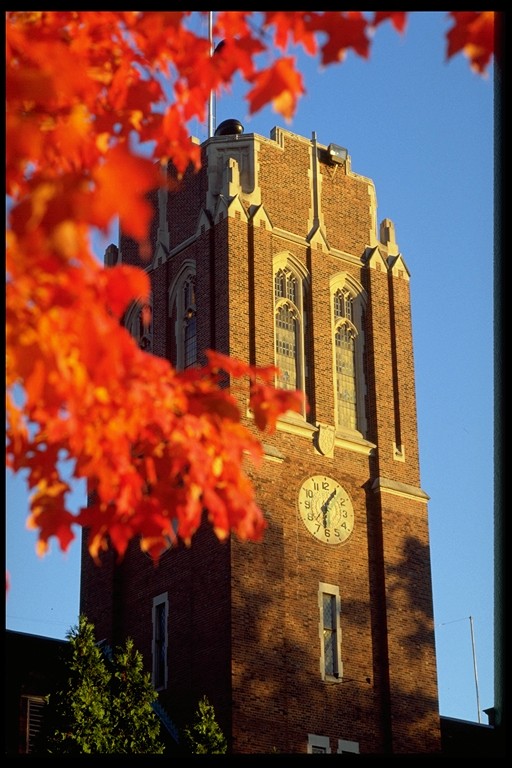
Generic college picture from here.

We were there to learn to be powerful. We were the women who were going to secure the promises of feminism— exciting careers, equitable relationships, endless opportunities. No glass ceiling for us. It was going to be all sky, baby.

I remember driving up for my first view of the campus. Punkish Middle Sister volunteered to come with me (grudgingly—she was in the throes of a new romance and was loathe to leave). We drove through the snaking road, temporarily blinded by the streak of sunlight glittering in the Gothic windows of the central tower on campus.

“Wow...it's like the movies,” she said, suitably impressed. “Yeah, real Ivy and everything.” I was trying to be flip, trying to act like I was seriously considering going to another school. But this was the best college I had gotten into. This was going to be it. The air smelled rural, like tilled soil and grass. I watched the girls (I did not know to call them women yet) walking under the thickly clustered trees. Did they look happy? Intellectually fulfilled? Did they look powerful? I couldn't tell yet. But they were here, and that had to mean something. Unlike me, they looked like they could have gone anywhere.

We left shortly after a rousing speech by the college's President. “Look, why drag it out?” Sister argued. “You know this is where you will be.” And where she wanted to be was with her boyfriend.

Anyway, I couldn't disagree.

I was still surprised that I had managed to get into this type of school, coming from my decidedly ordinary high school. We were a school known more for the speed and talent of our football players than our academics. But some of us had seized on classes, challenging ourselves to do better, learn more. There was nothing better than the feeling of getting it RIGHT...the math problem, the analysis of the novel, the history question. We had found our talents and we were hooked. Truth be told, we were cocky...perhaps over-valuing ourselves to make up for a lack of enthusiasm in our peers.

I didn't know much about my new college except that it was very highly regarded, very academically rigorous, and that it was all-women. The first two attributes were enough for me. The last one...well, I'd learn to deal. “That's good. You're going to get an education. You don't need boys,” my father said. I rolled my eyes behind his back. I'd managed to juggled top grades and a complicated dating schedule in high school. I had no doubt that I'd be able to do the same in college. There were LOTS of co-ed schools nearby.

So I arrived, with my steamer trunks packed full of Gap jeans and romantic notions. My parents stood in front of me, my father in his baseball cap and my mother in her fuchsia slacks. We didn't look like the other families, like we'd done this before and would do this again. Those other families seemed confident. They knew who to ask for information. They were Fitzgerald people. Their voices sounded like money.
(more)


Nothing I learned as I settled into campus disputed that first impression. My new classmates were not only top scholars, but also poised and cultured women. They were also, mostly, wealthy. I'm not just talking about money. They had something I hungered for even more. Experience. These women had traveled, lived abroad, taken the kinds of enrichment classes I'd always dreamed about. They knew how to behave in every situation. They knew they would make their mark, their power was taken for granted. They knew where they belonged in the world. On top.

I never knew what it was like to feel so persistently wrong until I started the Right School. I watched my classmates take risks, experiment with every aspect of their lives, confident that even if they made a mistake, they would be fine. We were all women, they said—we had been kept down by society and now we had to make up for lost time. But I didn't feel that kinship. I couldn't forget that I was going to be debt for years after I graduated. I wasn't free like that.

Why couldn't their assurance rub off on me? As I inched through the dining hall line, I listened to the raucous Spanish in the kitchen. My well meaning classmates were gracious to the help, but usually they just ignored them. Brown hands spooned the baked beans into the warming trays. Brown people washed the enormous piles of plates, bowls, silverware.
I looked up at the workers, smiled. “I'm just like you!” They smiled back, distant and polite. I didn't want them to think I was privileged, because it didn't feel that way to me.

I'm embarrassed to think of how condescending I must have seemed.

So, maybe they were right. I was privileged, even if it was costing me dearly. So then, why I couldn't bring myself to be practical—to study economics and go to business school, or law school like my oldest sister? Because the main privilege I wanted to claim was the right to study whatever I wanted, to follow my dreams just like my friends were doing.

Especially since I found my native heath, my powerful place. The classroom. I wasn't as brilliant as most of my classmates, but I was in love with my English classes, psychology, anthropology, sociology. The pleasure I derived from unpacking a dense poem, or from connecting what I learned about !Kung women with a nineteenth century novel—it made my class resentments, my self-hatred, melt away. I felt dizzy with it. I felt most deeply myself...walking through the campus alone, my feet crunching on the carpet of leaves, talking to myself about all the things I was discovering.

I only felt powerful when I was alone.

How I wish I could give this story a happy ending, perhaps about a caterpillar who became a butterfly. But I arrived a tentative moth, and I didn't leave that way.

Sometimes I wonder if I wasted my expensive education. I'm not a captain of industry. I didn't succeed in the world of work. I'm in a traditional marriage, a stay at home mother who is not exactly challenging the patriarchy on a daily basis. I can fake my way through an encounter with the elite, but I can never duplicate their sense of solid entitlement. Those years were marred by intense depressions that colored everything gray.

But then, I remember finally getting to know some of my classmates, and learning to see them as people, not just as little Daisy Buchanans. And I remember those ecstatic walks around campus, drunk on its beauty and surfing on the ideas that seemed to expand my vision in every direction. Over a decade later, I still remember that power.

And I long to feel it again.

_______________
Fight and claim the power here.

Labels:


Continue reading...

Monday, September 24, 2007

Sunday Scribbling: Hello, My Name Is...(a sketch)

From here.

Ed note: This is a very rough draft of...something. A mood piece, really. I'm rusty.:)

____________________________

She sat up, so suddenly that she left her body's impression in the tangled quilt we'd been laying on. It looked like a discarded, lesser twin. We were in her parents' attic. It was summer, a long time ago.

“Don't you wish that feelings came with name tags...like those 'hello, my name is...' things? 'Hello, my name is sadness. Hello, my name is anger'?”

She was always saying stuff like that, asking questions out of the blue. I think she got them from the books she was always reading. I don't know. I rolled over on the floor, staring at the summer rain trailing down the skylight.

“How about 'hello, my name is happiness'?”

She curled her lips into a smirk. “Optimist.”

If you'd asked me when it started, when we started, I wouldn't have been able to answer you. We'd always lived near each other, spending time together at odd times. We never gave what we had a name.

I looked at her, sitting in a loose black t-shirt with her knees tucked in. In this light, you could really see her almost-prettiness. Her frizzy black hair tamed into a knot at the nape of her neck-her eyes big and jet black. She was like the first week of March, ugly Spring. My mother always said, “She's gonna be gorgeous...someday.” So I always looked at her twice-once for now and once for someday.

“Besides,” she continued. “You never see those feelings long enough for a 'hello.' It's always 'goodbye.' You can only feel sadness all the way.”

I laughed. I couldn't help it. She was being so dramatic, and I was just a boy. Oh, I wouldn't have referred to myself like that back then. I was a kid, or ideally a guy or a dude. But, I was just a boy. Gladys wasn't just a girl, though. Not even then.

I took her face in my hands and kissed her on the edge of her lips. She tasted like strawberry jam and witch hazel. “Hello, my name is joy.” That was the thing with Gladys. You always wanted to keep the argument going once it started, even if it hadn't been your idea. You ended up getting swept up in it.

I kissed her again. “Hello, my name is fun.” I kissed her more deeply. “Hello, my name is sexy.” She gave a smothered laugh against my lips then. And then we stopped talking.

Summer ended, as it always does, and we went back to our worlds. Gladys to her parochial girls' school, and me back to the tumble dryer of public school. One day, I was standing in my usual spot, talking to my usual friends. I don't remember about what. Nothing, probably. I was trying to be cool, but ordinary. Normal, as normal as a gangly seventeen year old guy could be. And then Gladys walked up to us. Not in uniform. I wish she had been. She was wearing some stupid hot pink dress and lime green tights underneath and big black boots. I couldn't even see early March, or 'someday.' There was only now, and now was a disaster.
(more)


I was trying really hard not to look at her, but she kept coming closer. Like she expected something. Meanwhile my friends watched the way you do when you are taking notes, getting ready to spread shit.

“Paul?”

I made my face go blank. “Uh...yeah. That's me.”

She was waiting for me to say something else, but I wouldn't acknowledge anything. Not even my name. And I was way better at waiting her out than she was at just standing there.

“Hello?” She gave it one last shot. Her voice sort of broke on the end.

“Yeah, bye.” My friends laughed now, nasty. I felt flushed with something dark and mean and happy. I'd finally managed to surprise her. I felt like I'd named myself.

She turned on her heel and left after that.

School, and school, and school. We didn't speak after that, and we never went back to that attic room. She was happy, though. I knew that much. She finally hit her “someday”—confident, had lots of friends, a boyfriend who held her hand through the halls. Probably he could answer all of her stupid questions with deep philosophy, or with quotes from the books she loved.

Sometimes, I walked up to her house, wondering what would happen if I rang her bell, wearing one of those stupid “hello, my name is...” stickers. Letting her fill in the blank, call me whatever she wanted. Starting again. But I never had the guts.

I was in my second year of college when I got the call. My mother, a sea of words like the static on the radio. Just a few words in perfect, clear focus. “Pills. Gladys. Funeral Monday.”

She was happy. I saw it whenever I took the time to look.

I wish I had shown her how to name it.

__________________________
To learn more names, go here.

Labels:


Continue reading...

Friday, September 07, 2007

Sunday Scribbling: Writing Exorcism

(From here.)

I admit it. I am obsessed with writing. Every detail. Writing books are like magic beans—I keep reading and buying them in the hopes that eventually, I'll be able to grow a Novel Beanstalk. Someday, I'll write up a catalog of every writing book I own, for your amazement and (it's OK, you can admit it) envy.

For years, I tried to deny my desire to write. It was almost too innate—too predetermined. I wanted to go to college and discover a hidden talent, something to change my destiny. And I tried. Photography. Music. Media. Art. Dance. I had fun, sure, none of those forms were really me. I still longed to write above all things. I just didn't think I really could. I loved books so passionately, I could never do them justice. I felt like I was cursed with just enough talent to understand the stories I loved so much, but not enough to create any myself.

Despite my wholesale ingestion of every writing text I could get my hands on, I've never felt confident. Part of the problem is the books themselves, I imagine. I have a very hard time taking the templates they offer and applying them to my own work. Where are my inciting incident, my antagonist, my hero's journey? Not always sure. I am beginning to suspect that the formulas only make sense after you have written something.

But another problem is mine. I compare myself to the books, point by point, until I find a dissonance. Then I sigh and try to think of something practical to do with my life.

Well, no more. Here is my exorcism of the most destructive ideas I believe about writing. I hope that seeing them outside of my mind will show us all how ridiculous they really are. Feel free to include your own crazymaking ideas about writing. Then we'll have a big bonfire and be free to discover new, better truths.


  1. Whole books are out there in the ether, fully formed, waiting for me to sit and channel them into existence. They are perfect, and complete, and inevitable.
  2. If I'm not in some sort of trance while writing...if my characters haven't taken over my fingers themselves...then I'm not producing quality work.
  3. I need to be very smart, highly educated, and utterly fascinating to write.
  4. I also need to be temperamental and more than a little insane.
  5. Ideally, my wardrobe would consist of nothing other than peasant skirts, black chiffon dresses, and high heeled boots. And a beret.
  6. Don't bother writing if you haven't lived in Paris, in a garret.
  7. Books and babies don't mix.
  8. Fiction is all that matters. Nonfiction writing isn't “real writing.”
  9. I haven't done anything worth writing about, and yet, I must always “write what I know.”
  10. Only writing directly into a work in progress matters, forget planning or notetaking or even just occasionally THINKING about what I want to say. If I need to think that much, I am not a real writer.
  11. If my writing doesn't resemble the examples in the writing books, I am not a real writer.
  12. If I am too unhappy, I must not really love writing.
  13. If I am too happy, I must not be “deep” enough to be a writer.
  14. Be suspicious if it comes too easily. Be suspicious if it's too hard.
  15. Either you are a genius, or you are nothing. And you are probably not a genius.

If you see any of these ideas walking down the street, looking for a new home, be sure to cross the street. But first, give them a kick in the shins for me.
________________________
For more writing know-how, go here.

Labels: ,


Continue reading...

Sunday, August 19, 2007

Sunday Scribblings: Diaries


From here.

Isn't it seductive, perching on a Great Writer's shoulders, privileged to watch the slow accrual of genius? Even the set backs, the struggles, are satisfying because the ending is a foregone conclusion. Art. Creation. Fame. And occasionally, even fortune. That's the allure of the writer's diary...the ability to observe a creative mind at work and play.

This is why, even if I became exceedingly famous (hey, a girl can dream), I'll never allow my diaries to be published.

For starters, you know that nascent seed of brilliance, carefully nurtured in the fertile soil of the diary? Yeah, not so much in mine. In my pages, I am barely literate, barely conscious, perhaps because usually I am barely awake. For the last couple of years, the only consistent diary I have kept are those morning pages recommended by Julia Cameron. Stream of consciousness pages that stream forth the way real, considered writing barely ever does. Picture me, propped against the kitchen counter, pushing pen against that pocket of resistant time. Words piling on words frantically until, inevitably...mama! Or a little hand comes to pull me away from the page, back into my life.

These are not the words I want to be remembered by.

And then there are my girlhood and adolescent diaries, where I freed myself to explore every obsessive enthusiasm without the fear that I was making anyone (i.e. my parents) nervous. When I loved or hated, much to their chagrin, I kept myself at a white hot pitch of excitement, stoking it with the words of all of my favorite writers. I loved like Scarlett O'Hara. I wrote like Jo March in a “vortex” (or wanted to). I wanted to experience what couldn't be put into words...and then write about it, like D. H. Lawrence. I told myself that I contained multitudes, like my beloved Whitman.

Unfortunately, like most adolescents, my diaries fluctuated between high-minded philosophical musings and boys, dreams for the future and boys, imitations of my favorite authors and boys. I wanted to be offbeat, not to care about teenage crushes. But I was depressingly normal in that way. I cared about my teenage crushes, passionately.

I can't see any of that as a worthy legacy.

Sometimes I do think about starting a writer's diary, using my life consciously as material for stories, as a way to practice my craft and observation skills. But, I shrink from having yet another place where I have to perform, where I can't just relax, be foolish, naïve, angry. Bad. I use my diary to dig, dig through the surface emotions, to try and find a deep breath between them. I don't want to become self-conscious there as well.

So, no, I won't ever publish any of my diaries, should I ever become famous enough for someone to ask. The diaries are all process, not product. My terrible handwriting is like the jagged lines of a lie detector—the pages keep me honest, but they don't really reflect what I would like to do as a writer. Hopefully, whatever work I manage to produce will speak for itself.

That being said, if the literary establishment is very insistent, I'll can always point them towards a certain blog...
______________________
To unlock more secrets in a diary, go here.

Labels:


Continue reading...

Monday, August 13, 2007

Sunday Scribblings: Goosebumps (a fairy tale)


Once upon a long time ago, before our mothers' time, and their mothers' time, there lived a beautiful Princess in a kingdom on the edge of the world. This Princess lived a very solitary life, with only scores of moonfaced, silent servants and no playmates except her Shadow. Her own dear mama and papa, the Queen and King of the land, had both passed away when the Princess was just a baby. She hadn't thought much about this—it was just a vague, dull ache of confusion—until she heard the whole story whispered in the hallways of the palace.

Her parents had hosted a large, sumptuous dinner to celebrate the Princess's first six months of life. All of the nobles from around the land attended. and merriment went on far into the evening hours. But all was not well. The door knocker banged—one, two, three. And then there was one unwanted guest, a disgruntled fairy who had been overlooked for the Chief Fairy position one too many times.

“Bumps!” she had shrieked without preamble. “Bumps will end your lives...all of them—and doom this kingdom forevermore!”

Well, no one wanted to upset the fairy further, to be sure, but, as far as curses went, this one wasn't exactly menacing. So first a footman grinned, then a lady in waiting giggled, and before long, the room was engulfed in helpless laughter. Even the King and Queen smiled, wanly and carefully, as they had the most to lose. The infant girl on the Queen's lap paused in her nursing to clap at the tumult.

The offended fairy might have forgiven the servants in their witless merriment, but the sight of the King and Queen smiling sealed their doom. She turned red, then blue, then green, then striped (very difficult for a fairy, unless in a right fury). And then, she vanished without another word.

She was as good as her word. Every single person who attended that dinner fell victim to some bump or the other. The Queen perished from an infected bee sting. The King tripped over a bump in the royal carpet and bled to death. Only the small Princess was spared, because in her infant wisdom, she had merely clapped, not laughed.

After the endless time of tragedy, the people of the kingdom grew deathly afraid of bumps of any kind. Carpets were smoothed ritually every hour. Bees were kept under strictest supervision. The mashed potatoes were stirred until they were smooth as milk, to say nothing of the gravy.

Thus, the Princess grew up in a world as wide and flat as a piece of unlined paper. The horizon stretched endless, like the monotony of her days. She sat with her Shadow where the garden had once been. It was now a patch of perfectly even dirt.

They were bored.

“You know,” she said to her Shadow one day, “I'll bet if we rode hard for three days, we could reach the end of the land. Maybe we could find the fairy and beg for her clemency.”

“At the very least, we'd see a few shrubs.” agreed Shadow. They packed food and water, and set out.

On the evening of the third day, as the Princess drowsed by the (perfectly level) lake, she heard a scream. Her only friend, her faithful Shadow, was gone!

Immediately, she mounted her horse and rode after the abductors, but to no avail. Her Shadow was gone. The Princess fell to the ground, weeping. By the by, she heard a soft voice. “I can return her to you...for a price.”
(more)


Instinctively, the Princess knew the Fairy's voice.

“I'll do anything.”

“Are you sure about that?” The Fairy asked again. “Seems you didn't lose all that much. You could go on, much as before, without your Shadow.”

“I don't want to.” the Princess whispered. “Tell me.”

“I get cold in the winter.” the Fairy said. “Make me a quilt that contains one patch of fabric from each peasant hovel by the border. You must earn them—they cannot be given to you. You've gotten enough handed to you. And don't forget...one bump will spell your end.”

With that, she vanished.

For the first time, the Princess knew real fear. The peasants lived underground, as any dwelling they built after the curse would be considered a “bump” on the land. She ruled over them, but had never seen them.

But then she remembered her poor Shadow, lonely and terrified. She couldn't bare to think of that utterly even palace without her Shadow there. So she rode off towards the border.

When she arrived, she knocked on the ground until one of patches of earth slid open. “Who goes there?” A deep voice asked.

“The Princess.”

“And what does she want with our humble abode?”

“To cook and clean—do whatever it takes to earn a small patch of fabric from each of your houses.”

“That could take a long time.” The voice sounded amused now.

“I have nothing but time.” The Princess replied.

Finally, the voice rose up and became a young man, covered with dirt and dust and the occasional bruise. He was not handsome, but his dark eyes glowed with intelligence and good humor.

“Come on in.”

He took her down into the Under-kingdom—dark, dank, but...not flat. At all. The hovels went down into the bowels of the earth, and rose up almost touching the perfectly smooth lawn. They were ugly, but individual.

The Princess was fascinated. And the peasants were, as well. By her.

“But...we're just give you the fabric, your Majesty!” they said, bewildered. “Is this some sort of loyalty test?”

“No, no...and thank you for the offer, but the Fairy stipulated that I needed to earn them.”

After a long silence, one of the woman said, hesitantly. “I...I could use some help with the pigs.”

And with that, the Princess lived among the peasants. Hours turned into days turned into months. She slopped pigs, swept floors, tended babies. She also became bruised, dirty, scratched. But miraculously, no bumps marred her smooth skin.

In between her work, she got to know the young man who had opened the Under-kingdom to her. He shared his most secret dream with her—to build dwellings like those he had created underground, but that touched the sky. “We all want to see the sun again.” he confessed. And she told him about her loneliness, the vast emptiness of her life without her parents. He was the only person who understood exactly why she needed to rescue her Shadow, without asking.

“I'm not beautiful anymore, but bruised and dirty.” She said to him, ruefully.

He shook his head. “Before you were merely beautiful. Now you are beautiful and interesting. You tell a story.”

She blushed at all she felt at that, and could not say.

Soon, the Princess had all of the necessary patches to make a glorious, if somewhat grimy, quilt. But she didn't know how to sew.

“I'll teach you.” The young man said. And he did. They stayed up for three days and nights until it was done. When she triumphantly unfurled it, the young man took her into his arms and kissed her. And a million butterfly wings batted in her stomach, and she shivered with her first ever case of goosebumps.

“Now I will surely die.” she said. “But...I die knowing love. I must thank you”

He held her close as they waited for the curse to be fulfilled. “There are many ways to be dead,” he whispered to her. “Take me with you.”

And they waited. And kissed. And waited.

Instead of the death, the Fairy appeared, hand in hand with the Shadow. “You have pleased me well, my child. You've always shown great promise, even as a baby. And now that promise has been fulfilled. The curse is lifted.” The Princess and the Shadow embraced, weeping. Then the Princess introduced her young man. “This is the man I will marry.”

At that, the hovels rose out of the earth and became splendid houses, and the thrilled peasants were suddenly rich landowners. Music sounded in the background, and the Princess and the Builder became King and Queen.

The King fulfilled his dream of buildings that scraped the sky. The Queen ruled compassionately and well. And the Shadow enlivened them with story and song.

And they all lived happily, and bumpily, ever after.
_____________________
For more tales that go (goose)bump in the night, go here.

Labels: ,


Continue reading...

Saturday, August 04, 2007

Sunday Scribblings: Decisions, decisions


But is it ever..REALLY?

You know how difficult it is for me to make a decision? I just wrote out about eight different first sentences for this post—and that was after I spent a few hours debating whether I should attempt to write fiction or nonfiction!

Seriously, I am probably one of the most indecisive people you could ever meet, a fact that has caused me serious unhappiness in my life. I'm a devotee of the “deer in headlights” method of decision-making, aka “if you ignore it long enough, it will change and then you won't HAVE to decide.”

I once debated for years about whether or not to buy a pair of sneakers.

This is not good. This leads to regret. And I do regret—I regret almost everything that I've done in my past—or failed to do. The wrong jobs. The right jobs left for the wrong reasons. The wrong jobs left for the right reasons, but which perhaps could have worked out if only I'd stuck it out. Not going to graduate school before getting married. Not going after getting married. And most of all, I regret not using that lovely expanse of time before motherhood to write seriously. Oh, sure, I wrote, in spurts...but considering how much time I had to work with, what else was I doing? Sleeping? Eating?

Hopefully, sleeping.

It's ironic that I want to be a writer at all, considering how much decision making THAT entails. I have no doubt that is why I am so often blocked. Should Catherine break up with Nick before or after she gets fired from that last acting job? Should Marisol reveal her family's deep dark secret in order to save her best friend's life? And...what would that dark secret be, again?

Exactly.

And it's not just plot points. Every time I read a book on craft, I am paralyzed by the sheer number of concepts I need to keep in mind. Narrative arcs. Character arcs. The three act structure. Point of view. Is my dialogue moving the story along, and revealing character without being too “on the nose?”
(more)


By this point, I've vowed to read and re-read the Literary Canon before attempting to write another word. Or else I've already allowed my attention to wander to the television, or to conversation. Or, usually, I just keep writing in my head, convinced that if I just work out all of the possibilities in my mind, I'll smooth out the tangles before my words land on the page.

Writers, stop laughing.

In fact, I think this ceaseless search for certainty—for direction that will help me avoid mistakes—fuels my passion for reading. When I'm feeling more self-confident, I read novels—exploring each character and their universe, discovering snippets of wisdom along the way. When I am feeling less-than-confident, I read self-help books. And writing books. And horoscopes.

Guess which ones I'm reading more and more lately.

I think my inertia about decision making stems from this absolute belief, one I can't shake, that if I make a mistake, I won't be able to fix it. If I go down the wrong road with my novel, I will have ruined it beyond repair, squandering a promising idea and proving beyond the shadow of a doubt that I'm never going to accomplish anything in my life. If I apply to the wrong graduate school program, then I will have squandered our hard earned money, proving beyond the shadow of a doubt that...well, you get the idea.

So I wait. And I read writing books. And every day, I decide to stop, and then I decide to start. Stop. Start. I dither, and doubt, and do everything except just write. I try to keep William Stafford's exhortation in my mind, the one about "aiming lower." I really try. But...in those OTHER immortal words, the ones said by Yoda, "There is no try. Only do."

I can't even choose whose advice to take...about making a choice.

I'm not sure how to end this post. Maybe I'll decide that later as well.

Oh, and I finally bought those sneakers. And enjoyed them to no end. But never really felt like I lived up to them.

There's probably a lesson in there somewhere.

If only I could decide what it was.
___________________________
Decide to read more posts here.

Labels:


Continue reading...

Saturday, July 28, 2007

Sunday Scribbling: Phenomenon


(Needs NO introduction...)

Do you remember what it was like to watch your older siblings or parents getting ready to go out on a Saturday night, when you were too young to go? It was a ritual that began in the late afternoon. My mother and older sisters would carefully pin up their hair in enormous wire curlers (that we called “rollers”) to try and tame their curly hair into something approximating Farrah Fawcett's famed “shag.” Then there were the costume changes—long skirt or shorter? High heeled boots or wedges? And then, the hours spent in the bath and doing their makeup. When they finished and finally released their hair from its confinement, they looked like dazzling late 70s pinups.

The men in my family were not far behind. My father had a shiny black suit for such occasions, a suit I can only describe as pimp-like. He liked to pair it with a poly-silk blend shirt with a rather wide collar. His handkerchiefs (monogrammed, naturally) always smelled deeply of his favorite cologne. My brother was more adventurous in his attire. That white John Travolta suit of “Saturday Night Fever” fame? He owned a replica. Along with the stacked heeled shoes to go with it. He would strut around the apartment in a low slung towel, carefully laying out his clothes down to the socks. His ebony straight hair, the envy of every female in my family, flopped fashionably in his eyes.

These nights were the epitome of vicarious pleasure for me. While I stayed home with a tia watching the Love Boat, the rest of my family was off to live the glamorous Three's Company party life. Hey, I was young, and not very sophisticated. To me, being an adult meant being able to go out dancing like Chrissy, Janet, Jack, and Larry.

This is all to explain a bit of how I felt the last couple of weeks, during the height of the Harry Potter phenomenon. Like the world had decided to throw itself a party, and all I could do was watch it get dressed and boogie out of the door.

Oh, I have read (most) of the books—ravenously gobbled up books one, two, three, and four, but started to lose a little taste for it sometime around book five. I never got around to book six, and well, here we are.

But this post isn't really about that.

No, I was fascinated by the growing sense of celebration and excitement experienced by the fans. For years, they had plowed so much of their attention, love, and creativity into this fictional realm. They went online to plot out elaborate theories, to debate their various romantic preferences, to connect to others who felt as they did. They wrote reams of fan fiction; posted gorgeous music videos cobbled together from movie scenes.

And so, this was their moment. They sowed passion, and reaped a joyful riot in return.

It all made me think about what I was digging deeply in my own life. I'm the kind of person who is happiest when she's passionately, obsessively consumed with something—whether it be a relationship, a work of art or pop cultural entertainment, or anything. I love being invested at that level—the satisfaction of "your" team wins the World Series, or World Cup. The way some people feel when their fictional romantic couple finally declares their undying love, and shares a kiss. Finally get to see the Police reunite, or hear Aida at the Met.

If I am honest, I am not giving myself away in that way right now. Sure, I am engaged in the day to day mothering of my Madam, and while that is deeply satisfying, even joyful work, it's not quite...the same for me, for reasons I can't exactly articulate. I am getting close with my novel (finally started to daydream about the characters, a sure sign that they are becoming real for me), but...that's solitary work. And my poor little blog is also suffering from my inattention...my posts are more scattered, less frequent. I feel disconnected from this place, and from the larger blogsphere that once fed me.

I am sowing inattention, and reaping apathy.

So, while hordes of Hogwarthian revelers thrilled at the culmination of their particular passionate phenomenon on July 21 at 12:01am, I made a quiet vow to myself. I would remember this “Saturday night Love Boat outsider” feeling, and use it to as a reminder of feed my passions, and spend myself in them, no matter how foolish they may look to outsiders.

I'm already planting the seeds.
_____________________________

For more phenomenal posts, go here.

Labels: ,


Continue reading...

Saturday, July 14, 2007

Sunday Scribbling: Hair Today, Gone Tomorrow (a short fiction)


Medusa by Carvaggio


Ed note: Yes, that is an unforgivable pun in the title...but what can I say? It fits my story. :)
_______________________________________________________

It wasn't once upon just any old time. No, it was May 24, 1980—the day my sister and I were born.

“Gemini twins!” shrieked my Tia, happy to flash her astrological know how. “And they're right on the cusp.” The cusp of what, she refused to say.

We were not identical twins. Marta, my sister, was a whole pound heavier than I was. I know they say you can't remember your time in the womb, but I can imagine it—her using those fetus fins to sweep in more and more foody goodness, which I spun around in confused somersaults of starvation.

But that wasn't even the main difference. No, my sister was blessed with something else. The most beautiful, wavy, fairy tale hair you ever saw. Never frizzy, never flat. The kind of hair described as “raven tresses cascading like a waterfall” down some heroine's back.

And the rest of her lived up to the promise of her hair.

As for me? My hair also reminded people of a story—the story of Medusa. Kinky, curly wild hair that stood up and snarled at you. It would bite if you got too close.

I'd like to think the rest of me was an improvement over the tale my hair was telling people.

Things went along, we all grew older, and then one day, just before I turned eighteen, I woke up and saw that my hair was about six inches shorter. I thought it was a joke.

“Marta...did you cut my hair while I was sleeping?” It's kind of an odd question, but if you knew us, you would understand why I had to ask.

She sniffed, “Me? I don't go near that stuff without a rosary and a bottle of holy water!”

So it wasn't her. And if it wasn't her, then it wasn't anybody.

The next day, and the day after that, more inches. My hair seemed to be getting sucked back into my head.

I can't say it was any great loss.

On our eighteenth birthday, we had a huge party. Sometime after the cake was cut, I heard it.

Pop.

My scalp had finished drinking in the last of my hair. I was now completely bald.

“Ay, Dios mio!” My mother said. “It wasn't very good hair, but bald! Hair is the crowning glory of a woman!”

“Not Jiselle's hair.” said Marta, trying to be soothing.

“And her with those freaky eyes, too” said my Papi. “Ojos que tragan.” Swallowing eyes.

Well, it would have been enough to depress almost anyone. But truth be told, I was happy to be rid of that hair. It never really felt like me.
(more)

Not that I didn't try to grow it back, or grow something back. I used special shampoos and conditioners and creams that made me feel like the first human Chia Pet. But at stubbornly wild as it had once been, it stayed just as stubbornly gone.

Nothing to be done. So Marta and I go off to college—different ones, thank goodness. And I played with wigs and hair color—pink for the punks, blonde for the party people, brown for the studious intellectual types.

It was with that latter group that I met Victor Rana. “Like the frog,” He said cheerfully, holding out his hand. “Ha,” I said, weakly. “You know your Spanish.” But Victor Rana did not look like anything at all like a frog. Quite the opposite—straight black hair that fell over his green eyes (I always look at the hair first, of course), tall, handsome. It didn't matter if his nose was a little bulbous, or if his lips a little too frankly full and feminine. He was my ideal man, my Prince Charming.

Which, of course, meant that he didn't think of me as anything but a good buddy, someone who always took perfect notes in class and was willing to share.

“What can I say? Those eyes, those eyes of yours see everything, know everything. They can see what the professor is going to write before he does it." Then his voice would drop and get all serious. "What else do they see, Jiselle?” I would never know what to say to that. Hope had never worked out for me before. So I would say something smart-ass and after a weird moment, he'd always just shrug and laugh.

Right before Halloween, Marta calls me and says she wants to come to campus. “I heard you all have an awesome party every year!” Typical. I was going to that school and I had never heard that.

She shows up a few days later, and we spend the whole day before the party getting ready. She's going as Rapunzel, of course. She's even prettier than I remember.

I fuss and search all of my wigs, looking for inspiration. But I can't think of anything to wear. Finally, I tell Marta, “You go on ahead. Just let me finish getting dressed.” Of course, I had no intention of showing up. Why should I? I could see where this was going to end up—Rapunzel and my Prince Charming would meet, fall madly in love. It had happened before, you see.

At around 11pm, there is a knock on the door. Marta must have forgotten something.

“Forget to let down your hair?”

It was Victor, looking adorable and confused. “What?”

Now I'm the one who looked confused, and not even close to adorable. Plus, I hadn't even put on a wig. So I was standing there, in front of Victor, totally bald.

“What...what are you doing here?” It occurred to me that he was looking for Marta. “She's at the dance,” I said, trying to pre-empt his question, act like I was all cool with the fact that he was infatuated with my sister.

He stopped at that, took a deep breath. Like he needed to prepare for whatever he was going to say next. Finally, he said “No,” and took my hand. “She's not.”

Turns out he hadn't just liked me for my note taking ability. And the bald thing didn't phase him at all, once he confirmed that it wasn't because I was ill. “It's kind of sexy.” He said. “Brings out those amazing eyes.”

Marta came back to the room after the party, and found us there, talking furiously, holding hands. She was thrilled for me, and so was the guy dressed like Prince Charming that she brought back from the dance.

And happily ever after? There's no after yet—just a beautiful now.

But the day after Victor and I started going out, I looked in the mirror and saw a slight peach fuzz growing on my scalp. And I smiled.

“Welcome back.”
_____________________
For more curly tales, go here.

Labels: ,


Continue reading...